What Month Is Best to Visit the Atacama Desert?
Any month works to visit the Atacama Desert, since the region logs more than 300 clear days a year and clouds rarely stick around for long. The real question is which trade-off fits your trip. March through May and September through November give the best mix: stable weather, thinner crowds and the lowest hotel prices of the year, without the extremes on either side of the calendar. June through August brings the coldest dawns, down to -10°C (14°F) at El Tatio before sunrise, but also the driest, crispest air of the year, which is why serious stargazers and photographers plan around these months despite July's crowds. December through February runs hottest during the day and carries the desert's one real weather risk, the Altiplanic Winter, when afternoon storms build over the Andes. Start by browsing the full lineup of Atacama Desert tours, then match your dates to the season below.
Quick answer
Any month works in the Atacama Desert, with more than 300 clear days a year, but March through May and September through November give the best balance of stable weather, thin crowds and low hotel prices. June through August brings the coldest dawns and the clearest skies, while December through February runs hottest with a real chance of afternoon storms.
Key takeaways
- March to May and September to November are the sweet spot, combining stable weather, thinner crowds and the lowest hotel rates of the year
- June to August brings the coldest dawns, down to -10°C (14°F) at El Tatio, alongside the driest, clearest skies of the year
- July is the coldest month's busiest stretch, when Chile's winter school break fills stargazing tours and hotels despite the cold
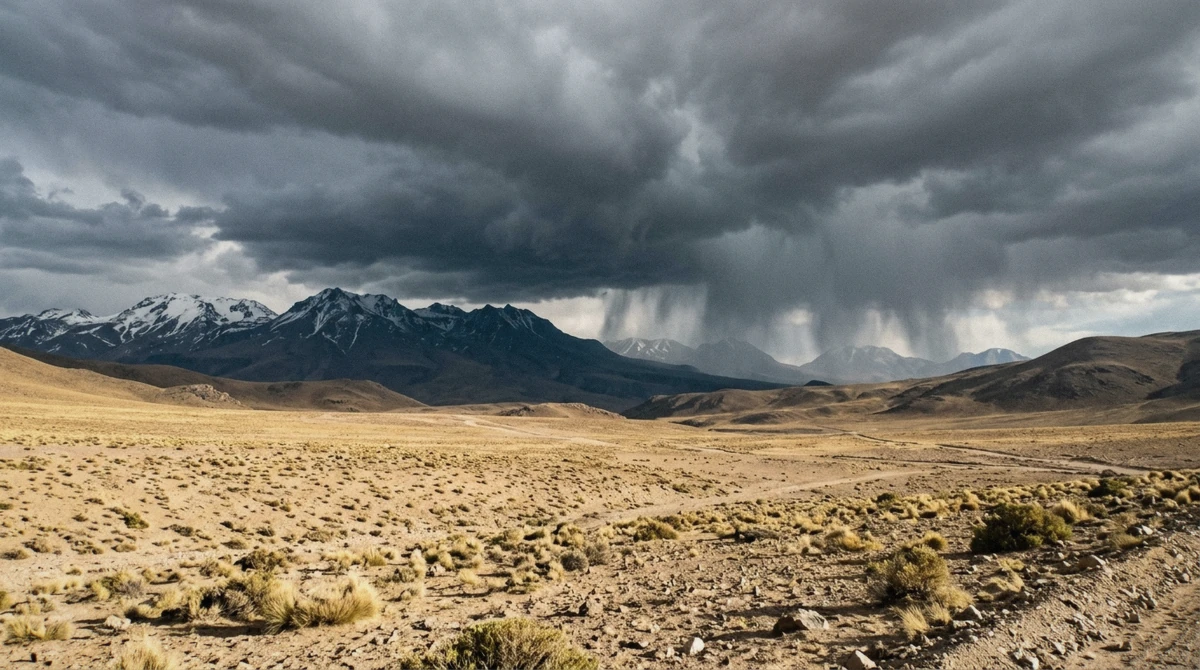
- December to February runs hottest during the day and brings the Altiplanic Winter, a stretch of afternoon storms over the Andes
- Altiplanic Winter storms are most likely to close high-altitude roads in January and February, worth checking before a Piedras Rojas or Uyuni departure
- Stargazing quality depends more on moon phase than season, book within five to six days of a new moon in any month for the darkest sky
Why Any Month Works in the Atacama Desert
The Atacama Desert is the driest non-polar place on Earth, and San Pedro de Atacama sees more than 300 clear days and nights a year. That single fact is why there is no true off-season here the way there is in a rainforest or a ski town. What changes month to month is temperature, crowd size and the odds of an afternoon storm, not whether the sun or the stars will show up.
- Rain falls on fewer than 15 days a year across most of the Atacama basin
- Daytime highs in San Pedro de Atacama stay between 61°F and 77°F all year
- Nighttime temperatures swing far more than daytime ones, from the mid-40s in summer to below freezing in winter
- Stargazing conditions depend more on moon phase than on the season
- The one genuine weather risk, the Altiplanic Winter, is confined mostly to January and February afternoons
Month-by-Month Weather, Crowds and Verdict
San Pedro de Atacama sits at 2,407 meters, and its daytime highs barely move across the year, from 61°F in July to 77°F in the warmest months. Nights are where the real swing happens, dropping below freezing from May through September. Use the Verdict column to find your window at a glance.
| Month | Day High | Night Low | Crowds | Verdict |
|---|---|---|---|---|
| January | 77°F | 45°F | High, summer holidays | Hot days, storm risk |
| February | 77°F | 45°F | High, easing after mid-month | Hot days, cloud risk peaks |
| March | 75°F | 41°F | Moderate, thinning | Warm, skies clearing |
| April | 72°F | 36°F | Low, sweet spot begins | Stable weather, good value |
| May | 66°F | 30°F | Low, cheapest month | Sweet spot, best prices |
| June | 63°F | 25°F | Moderate, winter break starts | Cold dawns, crisp skies |
| July | 61°F | 23°F | Peak, coldest month's crowds | Coldest, busiest winter month |
| August | 64°F | 27°F | High, still cold | Cold but clearing |
| September | 68°F | 34°F | Moderate, shoulder returns | Sweet spot returns |
| October | 72°F | 38°F | Low to moderate | Sweet spot, stable |
| November | 75°F | 41°F | Rising toward summer | Warm, stable, sweet spot tail |
| December | 77°F | 45°F | Rising, holiday build | Hot days, storms building |
Two numbers matter more than any other on this chart. July is the coldest month and also one of the busiest, filled by Chile's winter school break, and January and February are the warmest months but the only ones carrying real storm risk. Everything else on the calendar is a straightforward trade between temperature and crowd size.
The Best Month for Your Kind of Trip
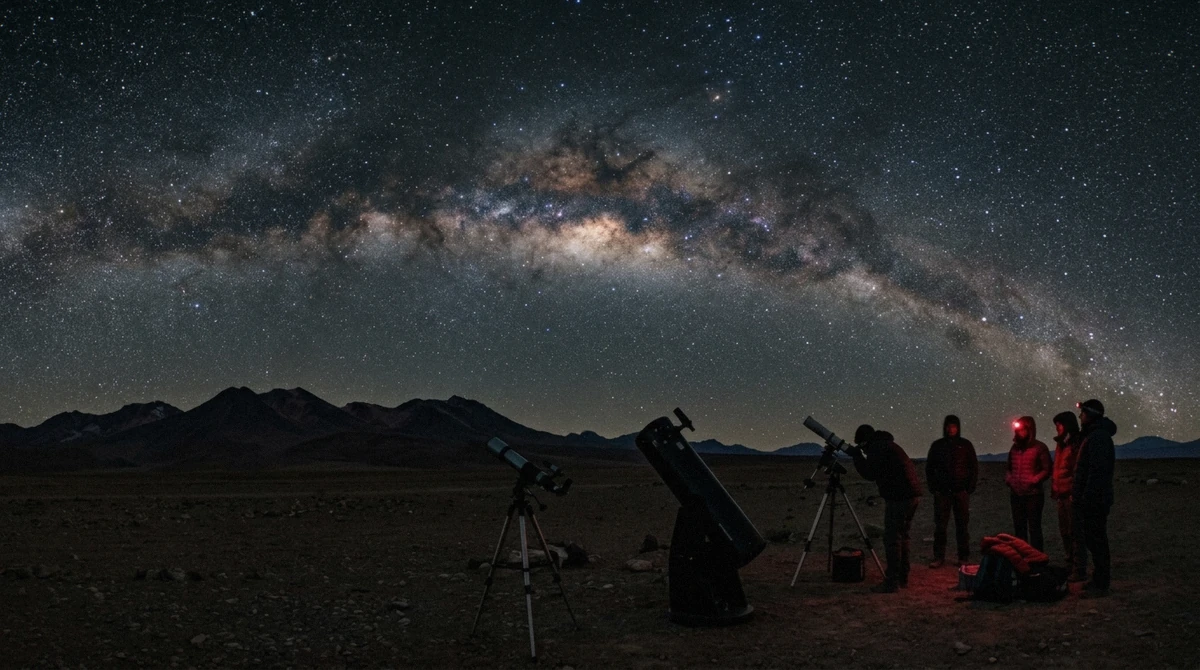
If chasing the darkest stargazing sky
pick any month, but build your dates around the new moon, five to six days on either side, rather than around the calendar season.
If traveling on a fixed budget
aim for May or June, when San Pedro de Atacama sees its lowest hotel rates and thinner crowds without losing clear skies.
If set on seeing El Tatio at its most dramatic
go June through August, when the coldest dawns push the geyser steam highest against the sunrise light.
If combining Atacama with a Uyuni salt flat crossing
avoid January and February, when Altiplanic Winter storms carry the highest odds of a closed altiplano road.
If visiting for the first time with no strong preference
book March, April, September or October, the four months that combine stable weather, thin crowds and lower prices.
March to May and September to November: The Sweet Spot
March through May and September through November give the most reliable trip on the calendar, and it is not close. Skies stay clear, daytime highs sit in a comfortable 66°F to 75°F range, and hotel rates in San Pedro de Atacama run noticeably lower than the December through February and July peaks. Crowds thin out enough that popular stops like Valle de la Luna and the Piedras Rojas altiplanic lagoons stop feeling crowded at their overlooks.
October in particular pairs warm days with skies clear enough for both daytime landscape photography and nighttime stargazing on the same trip, a combination the peak summer months rarely offer without the added storm risk.
June to August: Coldest Dawns, Crispest Skies
June through August delivers the coldest mornings of the year and, for exactly that reason, the clearest ones. Dawn temperatures at El Tatio drop to -10°C (14°F) as the geyser field's steam columns rise white against a still-dark sky, the reason the El Tatio geysers draw their biggest crowds in these three months despite the 4:00 AM pickup and the need for serious layers. Humidity across the whole Atacama basin drops to its lowest point of the year in this window, which is also what makes July the strongest month on paper for stargazing and astrophotography, cold as the wait outside a telescope gets.
July doubles as Chile's winter school break, so book stargazing and El Tatio slots at least two weeks ahead if your dates land in that month.
December to February: Hottest Days, Altiplanic Winter Risk
December through February brings the hottest daytime temperatures of the year, up to 77°F in San Pedro de Atacama, alongside the desert's one real weather risk. Locals call it the Altiplanic Winter, or Bolivian Winter, a summer pattern where moist air pushes in from the Amazon basin and builds into afternoon thunderstorms over the high Andes. Mornings usually stay clear, but by early afternoon clouds stack up over the volcanoes and can bring lightning, hail or heavy rain to the altiplano, occasionally closing the roads that reach the high lagoons or the crossing route toward the Uyuni salt flats.
January and February carry the highest odds of a closure, so a multi-day itinerary in those two months is worth building in a spare day. San Pedro town itself, at 2,407 meters, rarely sees more than a light shower even during an active storm cycle.
Timing Your Trip to the Moon
Moon phase changes what you will see at night more than the month on the calendar does. Book any stargazing outing within five to six days of a new moon, when the sky is darkest and the Milky Way core shows up in full detail through a telescope on an Atacama Desert stargazing tour. Around the full moon, moonlight washes out all but the brightest stars and planets, and some operators pause or swap their astrophotography-focused departures for that stretch, since long-exposure shots need a dark sky more than a clear one.
Check a moon phase calendar before locking in dates if a dark sky is the main reason for the trip. This rule holds in every month of the year, dry season or wet, which is why a well-timed February trip can outperform a poorly timed July one for stargazing alone.
High Season, Prices and What Closes
December through February and July are the two high seasons in San Pedro de Atacama, and hotel rates climb accordingly, sometimes 30 to 40 percent above the shoulder months. Almost nothing physically closes in the Atacama Desert itself: El Tatio, Valle de la Luna and the salt flat lagoons run year round, since the desert climate does not have a true rainy season the way tropical destinations do. What actually limits access is the occasional Altiplanic Winter road closure described above, along with individual operators trimming stargazing departures around the full moon.
For a full cost breakdown by category, see what a trip to the Atacama Desert costs.
| Period | Months | What to Expect | Booking Tip |
|---|---|---|---|
| High season | December to February | Hottest days, busiest hotels, afternoon storm risk from the Altiplanic Winter | Book lodging 2 to 3 months ahead, add a spare day for altiplano routes |
| Winter peak | July | Coldest month of the year, but Chile's school winter break fills tours fast | Book stargazing and El Tatio slots at least 2 weeks out |
| Sweet spot | March to May and September to November | Stable weather, thinner crowds, the lowest hotel prices of the year | Book 1 to 2 weeks ahead, still the best value window |
| Quiet stretch | June and August | Cold, clear and dry, with fewer visitors than July | Flexible booking, good odds of last-minute availability |
Frequently Asked Questions
What month is best to visit the Atacama Desert overall?
March through May and September through November are the best overall months, combining stable weather, thinner crowds and the lowest hotel prices of the year. Daytime highs stay between 66°F and 75°F, nights are cold but rarely extreme, and the odds of a storm disrupting a tour are close to zero outside the December to February window.
Which month has the clearest skies for stargazing in the Atacama Desert?
July has the driest air and clearest skies on average, but moon phase matters more than the month. Book any stargazing tour within five to six days of a new moon and you will get a dark sky in January just as reliably as in July, without the winter crowds or the coldest dawns.
What is the coldest month to visit the Atacama Desert?
July is the coldest month, with San Pedro de Atacama nights dropping to around 23°F and dawn temperatures at El Tatio falling to -10°C (14°F). Days still warm into the low 60s Fahrenheit under clear skies, so the cold is mostly a sunrise and after-dark issue.
When does the Atacama Desert get rain?
Rain is rare year round, but the December through February Altiplanic Winter brings the only real chance of it, usually as afternoon thunderstorms over the high Andes rather than steady rainfall in San Pedro de Atacama itself. January and February carry the highest odds of a storm closing a high-altitude road.
What is the cheapest month to visit the Atacama Desert?
May and June tend to bring the lowest hotel rates in San Pedro de Atacama, sitting between the expensive December to February holidays and the crowded July winter break. Tour prices themselves change little by season, so the savings show up mostly in lodging and flights.
How many days should a trip to the Atacama Desert be, and does the month change that?
Most trips run three to five days regardless of month, though a December or February visit benefits from an extra spare day in case an Altiplanic Winter storm delays an altiplano route. See how many days you need in the Atacama Desert for a full breakdown by pace.
Pick your month by what you actually want from the trip. A photographer chasing storm light books January and accepts the risk of a closed road. A stargazer on a budget books May or June and works around a new moon.
Someone with one fixed week off work should stop weighing the ranking and start checking the forecast and the moon phase for whatever week they already have, since the Atacama Desert rewards a well-timed day more than it rewards a well-chosen month.